
Children’s Stories
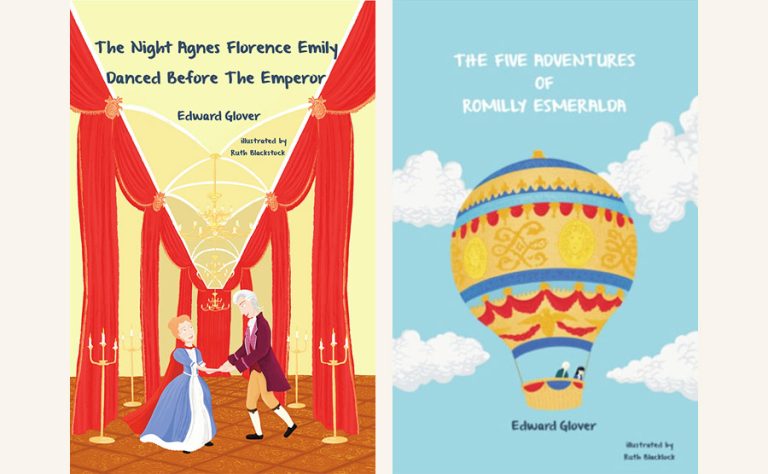
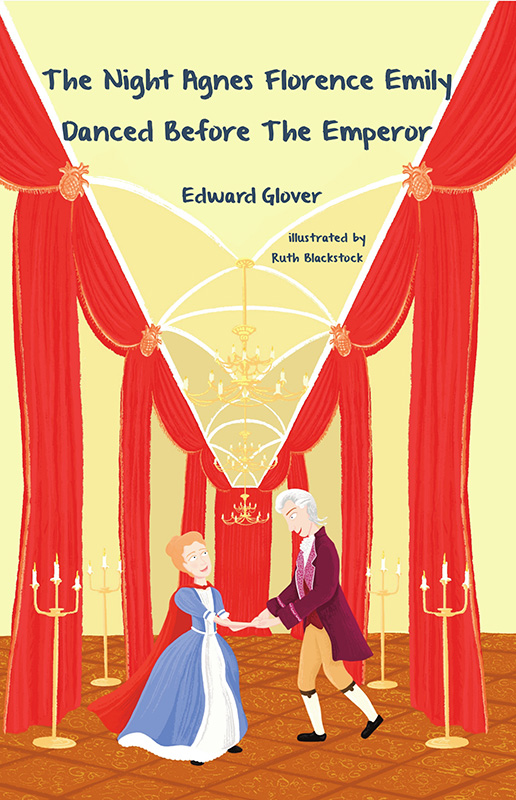
The Night Agnes Florence Emily Danced Before the Emperor
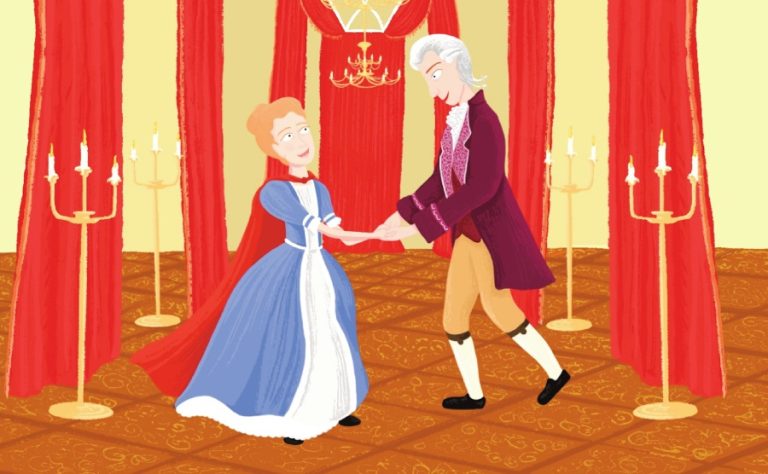
Agnes has strong likes and dislikes, particularly her aversion to noise. One night, when she’s exhausted and cross after a particularly tiring day, something extraordinary happens.
Available in Paperback and in Kindle formats on Amazon…

As I write in the Author’s Note, I wrote my second children’s story for three reasons:
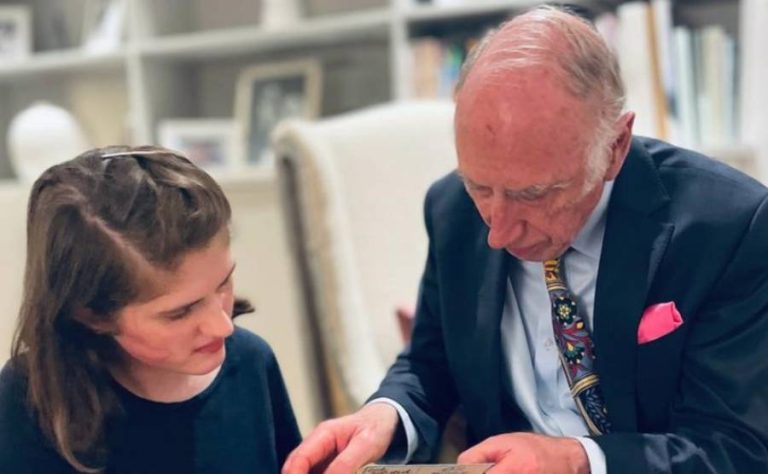
- First, my granddaughter is autistic. I wanted to salute her endearing character and resolute courage with a short bedtime tale drawing attention to the importance for her of predictability and assurance in her daily routine; of clarity of purpose; peace – not being overwhelmed by noise – and; above all the value of hearing soothing music. Moreover, it needed to be a story she might enjoy, one that might have a particular meaning for her.
- Second, I wanted to feature Wolfgang Amadeus Mozart because listening to his music is often a calming element at stressful moments in my granddaughter’s daily life. I too enjoy listening to Mozart at the end of a busy or tiresome day.
Rated 5 out of 5
20/11/2025
Review — Autism Canada
The story’s depiction of Agnes’s need for routine, quiet, and comfort in music reflects a nuanced understanding of autism. The portrayal is relatable and sensitive, which could resonate deeply with both autistic readers and their families.
Notes from our Ambassador: the language is appropriate; there are no negative depictions of Autism. the grandfather is the author, the representation of Autism is accurate, the magical realism is well done, the approach of special interests is from a soothing and playful angle instead of the obsessively negative context that sometimes happens.
By blending history, imagination, and music, the author provides readers with an engaging way to experience the world through Agnes’s perspective. This approach makes the story accessible and insightful for a broad audience, including those outside the autism community, and could spark meaningful conversations about neurodiversity.
But there was another reason for including Mozart. With autism now more widely understood, we have become aware of some historical figures whose legacies suggest they might have been on the autistic spectrum before diagnosis was possible. In the musical world, Mozart is thought by some to have displayed signs of autism.
Both he and his older sister, nicknamed Nannerl, showed impressive musical aptitude from a particularly young age. Born on the 27th of January 1756, he was only four years old when his parents noticed his ability – not only to learn music quickly but to memorise it too. He started composing at the age of six, writing his first symphony aged eight in a house in Ebury Street while visiting London in 1764. Although he died on the 5th of December 1791 just before his 36th birthday, Mozart left an incredible canon of music, from symphonies to concertos to operas to chamber music, choral pieces and more. He wrote over 600 works in his short lifetime, making him one of the most prolific composers of his time.
It is conceivable Mozart’s traits are a valid indication of autism. For example, though apparently easily distracted and bored by some tasks, he applied intense concentration when he was inspired, composing significant pieces of music in just a matter of hours. The overture to Don Giovanni is said to have been composed in only three hours the night before the opera’s premiere and performed to thunderous applause the next day.
Further behaviours suggesting Mozart could have been autistic are his highly sensitive hearing – loud sounds could apparently make him physically ill – and he was also said to struggle with impulse control and to use repetitive body motions and facial expressions, as well as word repetition (a pattern some say is noticeable in his music too).
Today, such talents and behaviours might well indicate a person with autistic tendencies. In Mozart’s case we’ll never know for sure. But with classical music providing such an important source of expression and calm for so many people on the spectrum, he is nonetheless a shining example of inspiration. For that reason, I chose to make him a character in this story, and I did so with great pleasure.
A last point. I’ve so far written and published six novels for adult readers between 2013 and 2021 – the first three forming a historical trilogy. This current divergence into writing for children has given me particular pleasure because it’s an opportunity to try to understand better a child’s mind, to get a glimpse of their view of this utterly unpredictable world and particularly how they perceive us adults.
Rated 5 out of 5
20/10/2025
The story echoes many of the traditional traits of autism, its struggles, yes, but also its incredible strengths. There’s a strong emphasis on sound and noise – how the overwhelming volume of the world can make it difficult to think clearly, to hear our own thoughts, or to be present without feeling rude. This is so real for many of us.
Agnes’ long-term memory stood out to me as one of her superpowers something many autistic people share. I also appreciated how she finds peace through writing, a quiet tool for understanding patterns and processing the constant “dot joining” going on in our heads.
Agnes’s need for routine, structure, and space to regulate was handled gently in the book – not painted as a flaw but as a part of who she is. I loved that. Music is a central part of her coping mechanism, and it was beautiful to witness how it helped her regulate and escape the pressure of the world. Her bond with Wolfgang Amadeus Mozart felt more than just imagination it was a lifeline. Music became her compass, her language, her friend.
Riddhima – neurodivergent, past colleague of the author
News about this book
-
News | The Five Adventures of Romilly Esmeralda | The Night Agnes Florence Emily Danced Before the Emperor
Celebrating New Reviews for My Children’s Stories
I have recently received two reviews of my second children’s book The Night Agnes Florence Emily Danced Before The Emperor and one review of my third children’s book The Five Adventures of Romilly Esmeralda. I’m delighted to share these thoughtful reflections below.
-
A Motif of Seasons | News | The Five Adventures of Romilly Esmeralda | The King Who Ate My Breakfast | The Lute Player | The Music Book | The Night Agnes Florence Emily Danced Before the Emperor
Edward Glover: The History Man
On 18th July 2024, Edward Glover was featured as ‘The History Man’ on the North Norfolk Living.
-
Writing a children’s story for my autistic granddaughter | Ambitious about Autism
My granddaughter is autistic, and she is the inspiration behind my latest children’s story – The Night Agnes Florence Emily Dance Before the Emperor.
-
Agnes’s Secret Friend
In my second children’s story – The Night Agnes Florence Emily Danced Before the Emperor – the principal character is of course Agnes, always looking for peace and quiet in a noisy world. The other notable character – her secret and very special friend – is Wolfgang Amadeus Mozart, whose music lulls her to sleep…